
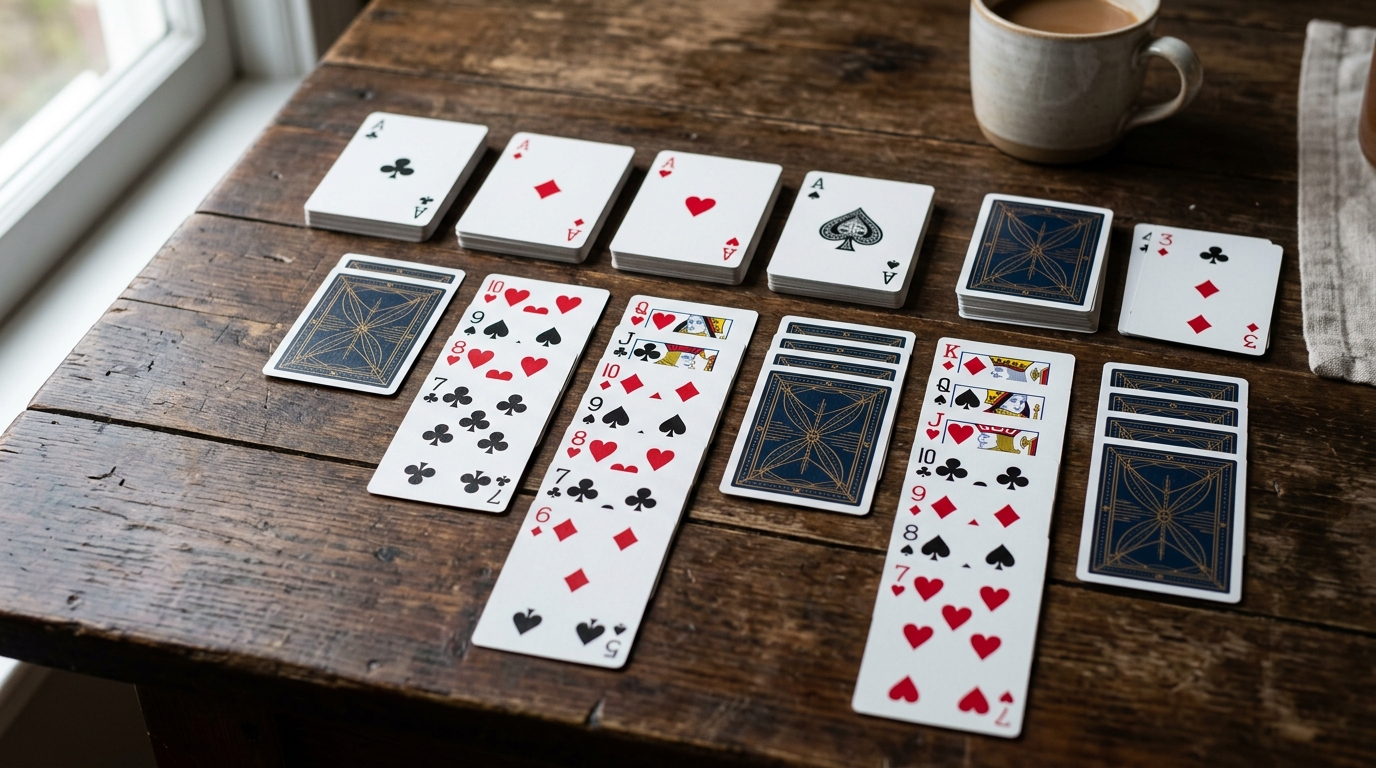
Solitaired Solitaire belongs to a wider story about how puzzles move between pages, books, websites, and apps. A familiar layout becomes more interesting when the player notices how a small rule change alters the whole decision tree. Each medium changes the player’s routine a little. A newspaper creates a daily appointment, a book creates a collection, and a browser makes the next board almost frictionless. The puzzle stays recognizable, but the reason people return can change with the format.
Solitaired Solitaire in practice
One game became a family of products
Solitaire is a useful example of how a simple rule set can support a large publishing ecosystem. The familiar Klondike layout can appear in a boxed card collection, a newspaper feature, a browser game, a mobile app, or a daily challenge pack. Each format keeps the core sequence but changes the reason to return. A book offers volume. An app offers convenience. A daily challenge offers a small appointment.
That variety matters because players do not all want the same session. One person wants a quick draw-three board. Another wants a score mode, a long archive, or a new variant after finishing the classic layout. The publishing layer gives the same rules different shapes without making the game unrecognizable.
Digital packaging can teach without talking too much
The best interfaces put the board first and the instructions nearby. A player learns by seeing which cards can move, which foundation is safe, and which face-down card is worth exposing. Good publishing is therefore not only about making more deals. It is about making the next decision readable.
That is why old card games still feel comfortable on modern screens. Their rules are compact enough to fit beside the action, and their feedback is immediate.
Pick the format that fits your day
Play free Solitaire on Easy Daily Puzzle or find related posts on this site. Microsoft’s history explains the desktop era, while Britannica’s patience article gives useful context for the wider family of games.
Turn the format into a useful routine
Before moving a card, read the tableau as a set of future spaces. A face-down card that can be exposed, a column that can be emptied, or a sequence that can receive several ranks is usually more valuable than a move that only makes the layout look tidy. The best legal move is often the one that leaves the most useful next move.
Keep the waste pile and foundations in view. In draw-three play, remember which useful card sits below the visible one when possible. In every mode, check whether sending a low card home removes a color or rank needed in the tableau. A foundation is safe storage, but the tableau is where the board changes.
When a deal fails, review the first decision that closed a lane or buried a useful card. Do not only replay the final few moves. The late problem is often the result of an early convenience move that looked harmless at the time. A short review makes the next deal feel less like luck and more like a sequence you can read.
For a calm daily test, start a Solitaire game on Easy Daily Puzzle and browse more Solitaire tips on this site. Set one goal for the session: expose more hidden cards, preserve a column, or delay one foundation move. A narrow goal keeps the game useful without turning it into a chore.
The small detail worth remembering
The most useful Solitaire habit is to separate movement from progress. A card can move without improving the position. Look for reveals, usable spaces, and sequences that keep options open. That simple filter makes familiar deals feel more deliberate.
A daily card game does not need a perfect win rate to be worthwhile. If the board helps you notice timing, order, and the cost of a convenient move, the session has already given you something to use on the next deal.
When in doubt, prefer the move that keeps more cards available. A tidy foundation is satisfying, but an open tableau usually gives the next decision more room.
For a little more context, read Microsoft Solitaire history and Patience card game overview. These references are useful for checking the basic history or rules without turning a daily game post into a long reference list.