
Draw 3 Solitaire waste pile rules provides curious players with a fresh, captivating perspective on why solitaire remains one of the most rewarding mental challenges in the modern world. Whether you are taking a well-earned coffee break at your desk, relaxing on your daily commute, or unwinding in the quiet evening hours, a single puzzle session creates an oasis of calm deductive clarity in a busy day. Here on Solitaired Solitaire, we are committed to sharing the rich background, tactical nuances, and practical wisdom that elevate your everyday puzzle experience.
You can put these concepts to the test immediately on the Solitaired Solitaire interactive board. To explore a vast world of daily brain teasers, crosswords, jigsaws, and classic card puzzles, visit Easy Daily Puzzle or discover our curated collection of solitaire games on Easy Daily Puzzle.
Draw 3 Solitaire waste pile rules: the story and strategic heritage of solitaire
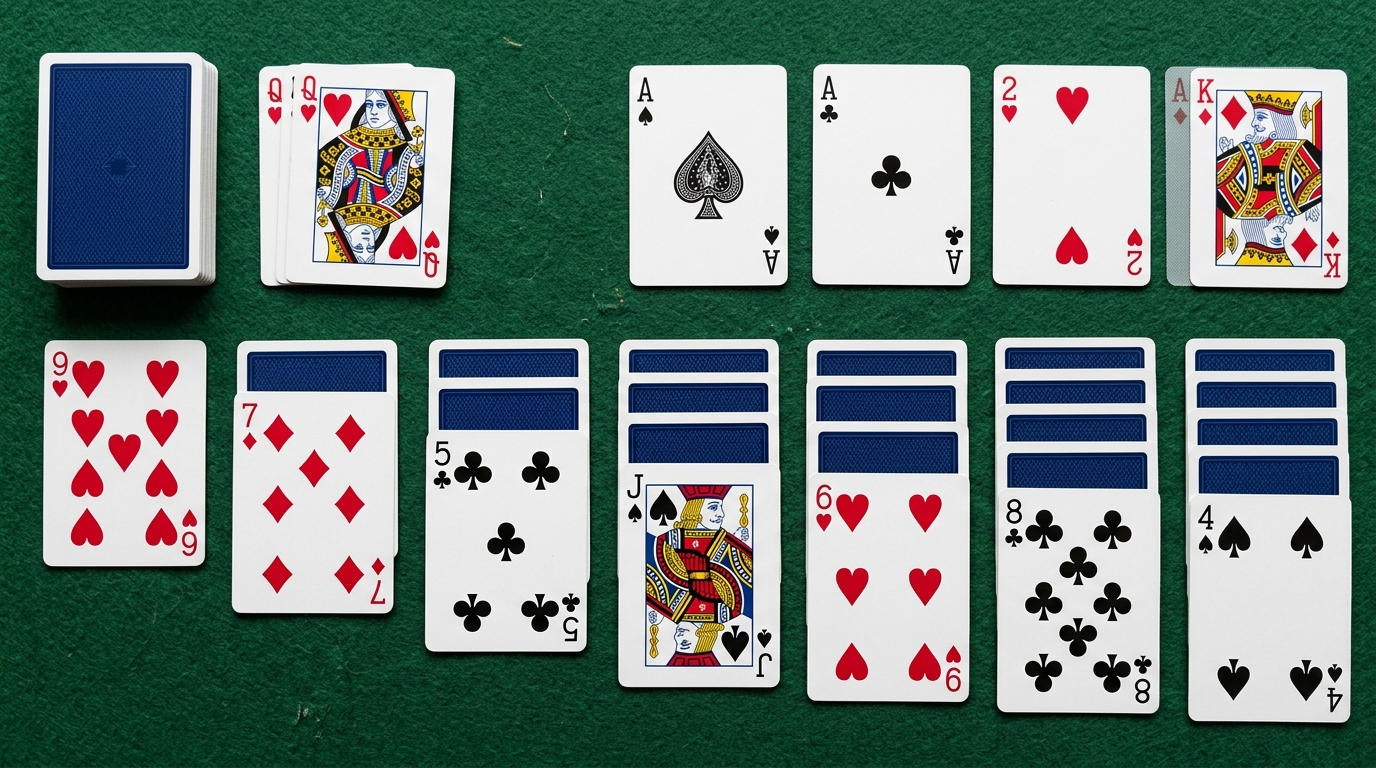
Draw 3 Klondike Solitaire introduces a fascinating layer of mathematical card tracking to standard rules. Instead of inspecting stock cards individually, players deal three cards at a time to the waste pile, with only the top card immediately accessible for play. This rule means that accessing a buried second or third card requires successfully playing the card resting above it, which immediately alters the order of subsequent deals. Experienced solvers mentally track three-card intervals, calculating how playing a single two-card sequence in the tableau will rotate the entire waste pile on the next pass. This predictive depth elevates Draw 3 into a deeply engaging exercise in sequential planning.
Exploring the deeper aspects of Draw 3 Solitaire waste pile rules reveals why simple games continue to hold such profound power over the human imagination. Behind every elegant grid, card tableau, or interlocking pattern lies a deliberate balance between order and chaos, designed to challenge our pattern recognition and problem solving faculties. When modern solvers understand these underlying principles, the game transforms from a casual pastime into a deeply satisfying mindful practice. Every round becomes an opportunity to refine your approach, test your hypotheses, and experience the quiet joy of finding the right move.
Historical records and trusted sources behind Draw 3 Solitaire waste pile rules
Separating documented puzzle heritage from popular hearsay requires consulting authoritative historical and gaming records. For readers eager to examine archival rulebooks, championship history, and technical analyses, reference materials such as Bicycle Cards official Klondike Solitaire rules and David Parlett on historical patience card games offer exceptional factual depth. These trusted publications document the creators, innovators, and international communities who have nurtured these games over centuries. Whether you are researching tournament scoring systems, mathematical proofs, or cultural origins, verified sources ground our modern play in enduring traditions.
How Draw 3 Solitaire waste pile rules guides player decisions in real games
Picture a Klondike deal where two low cards are eligible to fly up to the foundation, while five tableau columns still harbor covered face-down cards. The instinctive play is sending those cards home immediately to claim quick points. Applying Draw 3 Solitaire waste pile rules reminds you to keep those low cards active in the tableau if they can provide vital landing spots for alternating-color cards below. Rushing cards to foundations prematurely often locks out crucial transfers that could uncover the winning card.
True mastery in Solitaire lies in strategic pacing and information management. When you prioritize uncovering hidden tableau cards over superficial neatness, even challenging deals reveal unexpected paths to victory. Holding flexible cards in play preserves your options until the stock deck circulates its decisive turning points.
Essential player habits connected to Draw 3 Solitaire waste pile rules
- Survey the entire tableau before making the first obvious legal move on the board.
- Uncover hidden cards in deep columns before rushing low cards up to foundation piles.
- Reserve open lanes for Kings that unlock the most substantial piles of covered cards.
- Track card intervals in draw-three games to predict upcoming waste pile rotations.
Why clean visual design elevates Draw 3 Solitaire waste pile rules
A clean, distraction-free visual presentation is essential for enjoying solitaire on modern devices. The featured illustration accompanying this article has been selected to showcase the focused, calm atmosphere of deliberate play. Pairing clear visual graphics with descriptive alt text highlighting Draw 3 Solitaire waste pile rules ensures that solvers can comfortably connect theory with on-screen action. Whether you are playing on a high-resolution desktop monitor or a compact mobile screen, sharp contrast and thoughtful interface design keep your focus squarely on the pleasure of solving.
Taking your next step with Draw 3 Solitaire waste pile rules
The most enjoyable way to appreciate the power of Draw 3 Solitaire waste pile rules is to dive into an actual round today with these fresh insights in mind. Head over to Solitaired Solitaire for a relaxing, high-quality session where thoughtful strategy replaces rushed guessing. Whenever you want to expand your puzzle horizons with fresh daily challenges, explore the comprehensive Easy Daily Puzzle library for endless daily mental stimulation. Every completed puzzle is a testament to the timeless joy of clear logic, patient observation, and a well-played game.